1. Cockroaches:
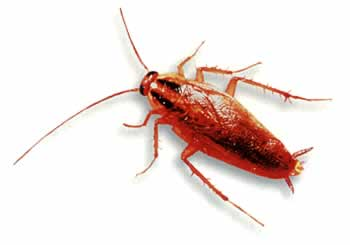
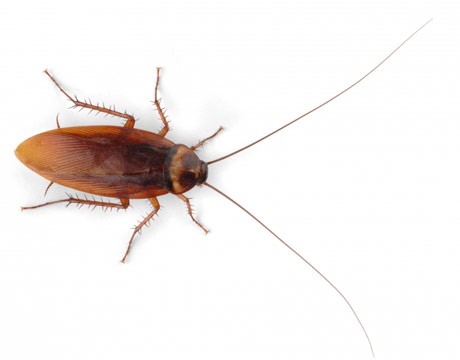
Description/ Appearance: Cockroaches are generally rather large insects. Most species are about the size of a thumbnail, but several species are bigger.
Cockroaches have a broad, flattened body and a relatively small head. They are generalized insects, with few special adaptations, and may be among the most primitive living neopteran insects. The mouthparts are on the underside of the head and include generalised chewing mandibles. They have large compound eyes, two ocelli, and long, flexible, antennae.
The first pair of wings are tough and protective, lying as a shield on top of the membranous hind wings. All four wings have branching longitudinal veins, and multiple cross-veins. The legs are sturdy, with large coxae and five claws each. The abdomen has ten segments and several cerci.
Habitat: Cockroaches live anywhere! You can find them all over the world. They live indoors, like in kitchens, classrooms, or any warm snug place. They live outdoors, like in forests close to water, and the tropics. They love wallpaper, cloth, ink, and cardboard boxes. They like anything that might have startch or protein. They will hitchike by hiding in boxes. Then they get loaded onto boats and wagons to find warm spots to live.
Interesting Facts: Cockroach is one of the hardest insect in the planet. Some species can survive for months w/o food. Some can survive for 45 minutes w/o air.
2. Bed Bugs:
Danger: Bites can leave itchy, bloody welts on the skin and can cause allergic reactions, such as severe itching.
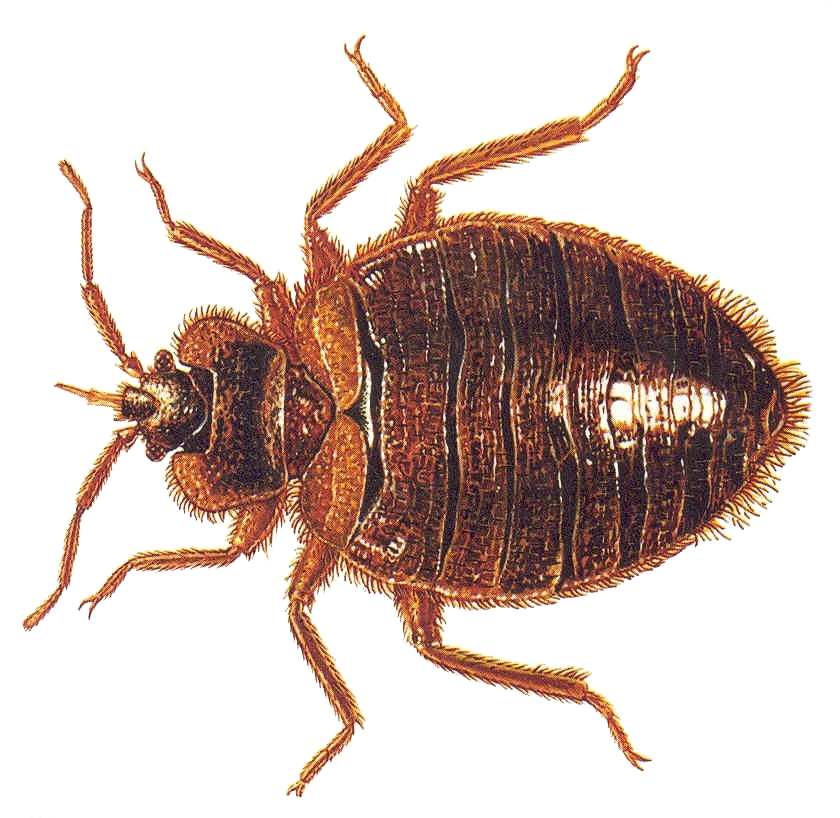
Description / Appearance: Flat, reddish-brown, oval insects about 3/16 long or the size of an apple seed. Swollen and reddish after a blood meal. Large infestations can be detected by a sweet smell like that of soda-pop syrup.
Habitat: Cracks and crevices including mattress seams, sheets, furniture, behind baseboards, electrical outlet plates and picture frames. Often found in hotels, where they can travel from room to room and in visitor’s luggage.
Interesting Facts: Bed bugs are difficult to control, as they can live for more than a year without eating.
3. Rodents:
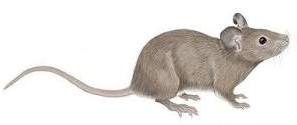
House Mice:
Danger: Contaminate food and surfaces through their feeding activity and urination. Protein in house mouse urine can cause asthma. House mice can also carry salmonella, lymphocytic choriomeningitis virus and a disease called rickettsial pox that is transmitted by the house mouse mite.
Description / Appearance: 5 to 7 inches long, from nose to end of tail. Typically dusky gray, moderately large and distinct ears.
Habitat: Extremely common in cities and towns, prefer indoors.
Interesting Facts: A house mouse can squeeze through an opening the size of a fills. In optimum conditions a female can produce 42-60 offspring in a year.
Danger Prevention Tips: To prevent house mice from entering the home, remove food sources and seal exterior entry points larger than 1/4 inch.
Norway Rats
Danger: Known to bite; along with ground squirrels, prairie dogs, deer mice and other rodents, can carry plague. Norway rats can also carry murine typhus. These diseases can be transmitted to people by the fleas living and breeding on the rat.
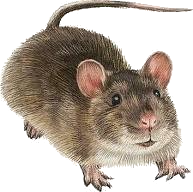
Description / Appearance: 13 to 17 inches from nose to end of tail; weighs 7 to 18 ounces. Stocky, heavy-bodied rat, typically grayish-brown.
Habitat: Nest around buildings or in underground burrows.
Interesting facts:The Norway rat originated in Central Asia, not in Norway. Their teeth can grow between 5 and 6 inches per year, so they constantly grind them against each other to keep them sharp and filed down.
Danger Prevention Tips: To prevent entry into the home, remove food sources, eliminate attractive shelter areas and seal exterior entry points.
Roof Rats
Danger: Can bite; along with ground squirrels, prairie dogs, deer mice and other rodents, can carry plague. Roof rats can also carry murine typhus. These diseases can be transmitted to people by the fleas living and breeding on the rat.
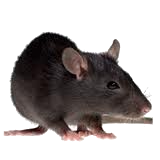
Description / Appearance: 13 to 18 inches from nose to end of tail; weigh 5 to 9 ounces. Medium-sized rat with tail longer than its body, slender body and large ears. Black or brownish-black in color, with belly varying from grey to white.
Habitat: Exterior vegetation and inside buildings; often found in attics.
Interesting facts: Very agile and can enter a structure through a hole the size of a quarter. The roof rat was the most common rodent found in southern European homes during the outbreaks of plague known as the Black Death in the 14th century.
4. Mosquito
Danger: Mosquitoes also pose an important danger internationally where they carry and transmit the infectious agents that cause malaria, lymphatic filariasis, yellow fever and dengue fever.
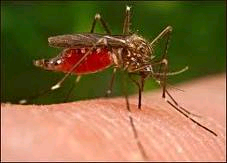
Description / Appearance: Approximately 1/8 to 3/8 inch long or the size of a small shirt button; two wings, body and legs covered with scales; long beak with piercing-sucking mouthparts.
Habitat: Can be found anywhere associated with water, including gutters, ponds, old tires or plant pots.
Danger Prevention Tips: Reduce mosquito populations by removing standing water and thinning out vegetation from around the home. When outdoors, wear an insect repellent. Ensure that window screens fit tightly and securely, and keep doors and windows closed when possible.
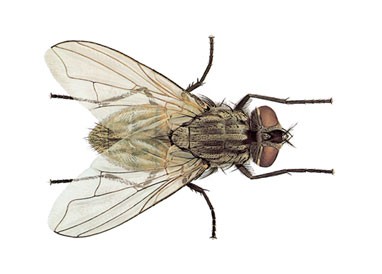
5. House Fly:
Danger: The housefly is often a carrier of diseases, such as typhoid fever, cholera, dysentery, and anthrax. The fly transmits diseases by carrying disease organisms onto food. It picks up disease organisms on its leg hairs or eats them and then regurgitates them onto food (in the process of liquefying solid food).
Description/ Appearance: House flies are 3/16 to 1/4 inch long with robust bodies and two clear wings. The thorax is marked with four dark stripes. Larvae are called maggots and are creamy-white and cone-shaped, with the hind end blunt and bearing breathing holes (spiracles) tapering to the head which bears black hook-like mouthparts.
Habitat: Adult flies have sponging-sucking mouthparts, with which they inject mainly liquid food or food dissolved with regurgitated saliva. Larvae have mouthparts (mandibles) used to tease apart decomposing organic materials. Larvae feed with the ends of the bodies bearing the breathing pores on the surface and their narrow heads imbedded deep in the food source. Just before completing larval development, they leave their food source in search of a dryer place to pupate. This is the time many larval infestations become noticeable. Large numbers of house flies can develop in poultry houses and around barns and feed lots where animal excrement accumulates. House flies developing there can fly to nearby homes and become an nuisance. Around the home, house flies can develop in garbage and piles of fermenting lawn clippings.
Interesting Facts: A fly may travel as far as thirteen miles from its birthplace. The common housefly has a maximum flying speed of five miles per hour… even though its wings beat 20 thousand times per minute.
Drain Flies - What are they? How do I get rid of them?
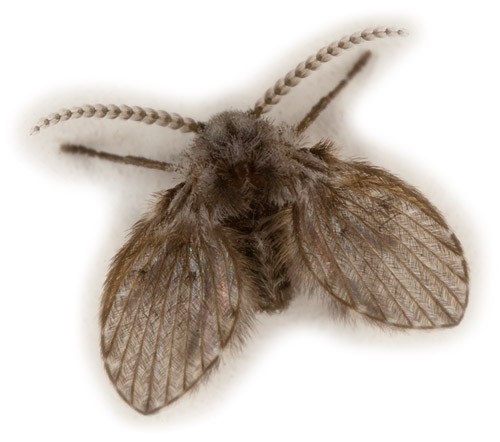
Common drain fly, Clogmia albipunctata. (Photo by Sanjay Acharya- Own work, CC BY-SA 3.0.)
Clogmia albipunctata is a species of fly in the family Psychodidae (Diptera), with a worldwide distribution, and is commonly associated with human habitation.
Other names for this insect include drain flies, sewer flies, filter flies or bathroom flies. Due to their hairy appearance, with dense setae on their bodies and long antennae, these insects are also referred to as moth flies or moth midges.
Although somewhat moth-like in appearance, these flies can be easily recognized by having only 2 true wings with distinctly parallel veins. Adults can vary in color from dark to light gray or tan, with spots on their wings, and a total body length of 2-4 mm (1/16-3/16”).
Where do drain flies naturally occur?
These flies occur naturally in shaded locations containing moist, decaying organic matter, such as wet wooded areas or swamps.
They are also commonly associated with:
- sewage treatment plants and sewer drains
- wet compost areas
- garbage cans with standing water
- clogged gutters
- potted plants with wet soil and standing water
- household drain
Phorid Fly (Flies of the family Phoridae)
Introduction
Phorid flies (Diptera: Phoridae), commonly referred to as scuttle flies, sewer flies, or humpback flies, are a well-known group within the dipteran insects.
Description
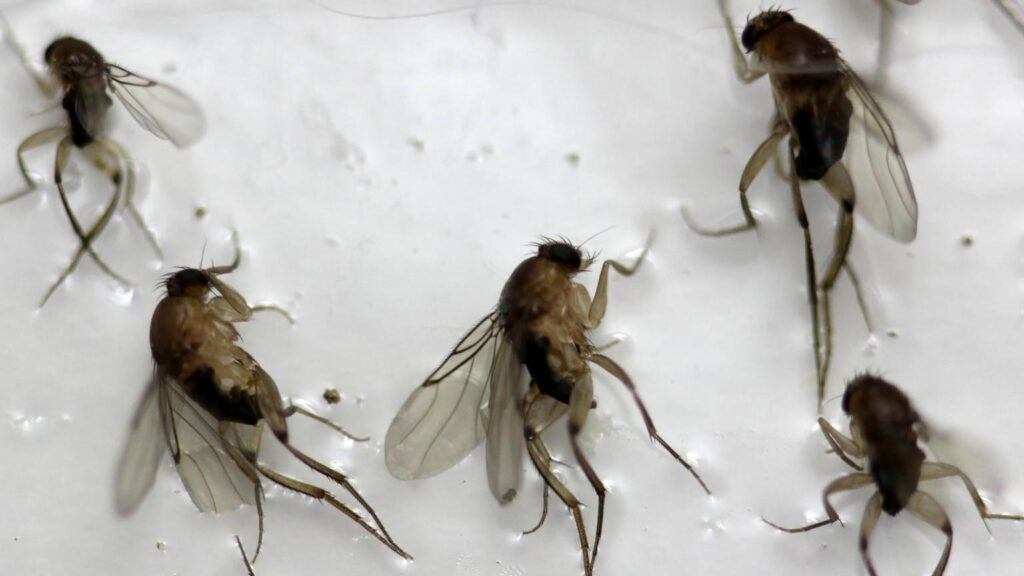
Adult phorid flies are typically less than 5 mm (0.2 inch) in length and frequently encountered in residential and commercial settings, where they are often misidentified as fruit flies. In contrast to fruit flies, phorid flies exhibit a distinctive locomotion pattern, running short distances, pausing briefly, then abruptly changing direction; they tend to escape predators by running rather than flying. These adults display coloration that ranges from brown to tan, occasionally marked by dark bands across the abdomen (see Fig. 1). Their wings are generally transparent, featuring several prominent, dark veins clustered near the wing base. Notably, phorid flies possess a characteristically arched thorax, resulting in a “humped back” appearance, with a small head positioned lower than the front of the thorax (see Fig. 2). The head may be equipped with bristles and the legs are comparatively long. Phorid Fly
Life Cycle
Phorid flies undergo complete metamorphosis, progressing through egg, larval, pupal, and adult stages. The immature forms—eggs, larvae, and pupae—are minute and seldom observed by inhabitants. Reproduction occurs in moist, decomposing organic material of either plant or animal origin. When breeding occurs indoors, immature stages are typically associated with locations such as unsanitary garbage receptacles, obstructed drains, or similar environments. Phorid flies can produce multiple generations annually, with population growth primarily restricted by low temperatures and the availability of suitable nutritional resources.
6. Weevils:
Danger: The rice weevil produces heat and moisture which can lead to mould development and invasion by other insect species.
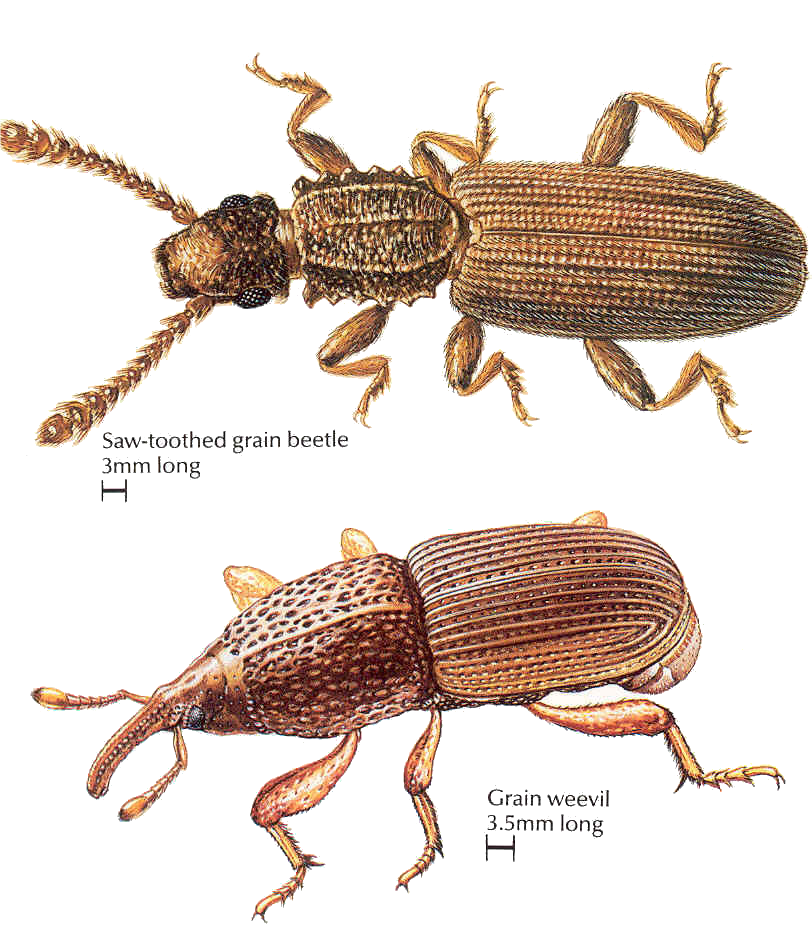
Description/ Appearance: Adults are about 1/8 inch long, reddish brown to black with four reddish or yellowish spots on the wing covers (elytra). The head bears a slender snout and the shield behind the head (pronotum) has course round punctures. The elytra have deep lines (striae) and course punctures. Larvae are legless, white and rotund with a distinct head capsule.
Habitat: Mouthparts are for chewing. Found in stored grains of all types including wheat, corn, oats, barley, sorghum, macaroni, and other grain products. They may also infest grain in the field. Larvae hollow out kernels of grain and usually attack whole kernels. Holes in the side of the grain are made by adults and by the emerging adults. They build up in numbers in stored grain.
Interesting Facts: rice weevils do not bite or sting humans or pets, spread disease, or feed on or damage the house or furniture.
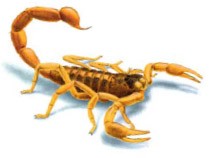
Scorpions
Danger Level : HIGH
Danger: Inflict painful stings that can be fatal to those with allergies, and, with certain scorpion species, to small children and the elderly.
Description / Appearance: Some species can be as big as 2 to 4 inches long, or about the length of a standard business card; have large pincers and long, curled tails tipped with stingers.
Habitat: Prefer dark, protected areas – often in and around structures – in warm regions. They are able to enter homes in many areas.
Interesting facts: All scorpions glow under black light, making black light an effective way to inspect for scorpions at night or in dark areas. Scorpions have live births and carry babies on their backs.
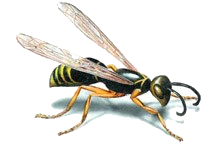
Paper Wasps
Danger Level : MEDIUM
Danger: Inflict potent stings that if repeated can result in hypersensitivity in two percent of the population
Description / Appearance: Up to 5/8 inch long. Covered with short, dense golden brown and black hair; striped abdomen.
Habitat: Around flowers and flowering trees. Can also make a hive inside a building or wall void. Important in agriculture to pollinate crops.
Interesting Facts: Honey bees are social insects, and they can only survive as a member of a community with a queen, drones and workers. A queen can lay 1,500 to 2,000 eggs in a single day. Honey bees play an important role in agriculture for the pollination of plants in UAE.
Danger Prevention Tips: Wear proper clothing and use caution when honey bees are foraging around your home on flowering trees and plants.
Honey Bees
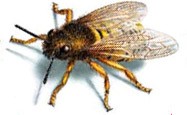
Danger Level : MEDIUM
Danger: Inflict potent stings that if repeated can result in hypersensitivity in two percent of the population
Description / Appearance: Up to 5/8 inch long. Covered with short, dense golden brown and black hair; striped abdomen.
Habitat: Around flowers and flowering trees. Can also make a hive inside a building or wall void. Important in agriculture to pollinate crops.
Interesting Facts: Honey bees are social insects, and they can only survive as a member of a community with a queen, drones and workers. A queen can lay 1,500 to 2,000 eggs in a single day. Honey bees play an important role in agriculture for the pollination of plants in UAE.
Danger Prevention Tips: Wear proper clothing and use caution when honey bees are foraging around your home on flowering trees and plants.
Fleas
Danger Level : HIGH
Danger: Bites cause irritation, blood loss and itching. Some species can spread diseases such as bubonic plague and murine typhus. Other species of fleas can be intermediate carriers of tapeworms and can infect humans if accidentally ingested.
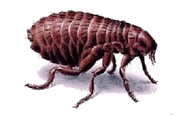
Description / Appearance: Miniscule, wingless parasites about 1/8 inch long or about the size of a poppy seed. Covered in spines with piercing mouthparts. Extremely difficult to crush.
Habitat: Live and breed on host animal’s body; often found near pet bedding; attracted to hair and fur. Often found on varmints such as rodents (including Norway or roof rats), and livestock. Of the approximately 2,500 species of fleas that infest birds and mammals throughout the world, people typically encounter only a few species, including the cat flea, dog flea, human flea, poultry sticktight flea and the oriental rat flea.E
Interesting Facts: Can jump 6 to 8 inches vertically, and 14 to 16 inches horizontally. Historically significant in that they carried and transmitted the bubonic plague (largest epidemic before AIDS), which killed a quarter of world’s population in the 14th century.